Stop Wasting Water: Fix Hidden Controller Issues
Sprinkler problems are not always about broken heads or dry spots. Many of the biggest water wasters hide inside the sprinkler controller, in the wiring and sensors you do not see every day. When those parts fail, your system can keep running during cool, wet weather and you may not notice until you get a big water bill.
We often hear from homeowners in McKinney and nearby areas who see a sudden jump in water use in the fall. A failed rain or freeze sensor, a field wire short, or a bad valve can keep zones running when the lawn does not need it. That extra water can stress plants, cause muddy spots, and shorten the life of your irrigation system.
In this article, we will walk through how to spot wiring and sensor red flags, simple checks you can safely do, what solenoid resistance readings can tell you, and why some wiring issues are better handled by a licensed irrigation contractor. Catching these problems early helps protect your system before winter freezes arrive and keeps your watering smart year-round.
Spotting Wiring and Sensor Red Flags Early
Controller and wiring issues usually show up as strange behavior, not always as a total system failure. Some common signs include:
- Zones that never shut off, even after their run time
- Zones that never come on, or only run sometimes
- Random skipping of stations during a watering cycle
- “No AC” or “Fault” messages on the controller display
- Blown fuses or tripped breakers after the system runs
Rain and freeze sensor problems have their own set of clues:
- Sprinklers running during or right after a good rain
- Watering on cold mornings when the sensor should pause the system
- The display shows the sensor is “active” or “bypassed,” but that does not match the actual weather
- The sensor “clicks” on and off constantly, stopping and starting watering for no clear reason
These issues often stand out more in the fall. Shorter days, cooler nights, and passing cold fronts make your lawn need less water. If your controller wiring or sensors are not working correctly, the system may keep its summer habits and water too much, or at the worst times, like right before a freeze. That is when hidden controller faults can do real damage.
Checking Rain and Freeze Sensors the Safe Way
A rain or rain/freeze sensor is a small device that tells the controller to pause watering when it is wet or too cold. In many McKinney, Collin County, and Denton County neighborhoods, these sensors are mounted on:
- Roof eaves
- Gutter edges
- Fence posts or railings
- Light posts or similar structures
Here are simple checks most homeowners can do safely from the ground or a short, stable step-ladder:
- Look at the controller and make sure the sensor is turned “on,” not bypassed.
- Use the sensor’s manual switch, if it has one, to gently test the “bypass” setting.
- Brush off leaves, spider webs, or dirt that may block the sensor.
- Check the sensor cable you can see for cuts, chew marks, or loose connections.
Avoid climbing on steep roofs or stretching too far to reach a sensor. Loose shingles and slick surfaces can be dangerous. Also avoid guessing at wiring changes. Incorrect sensor wiring can cause the controller to ignore weather conditions completely, which means the system may run right through rain and cold snaps. When in doubt, it is safer to have timely sprinkler controller repair in McKinney before the first real freeze hits.
Using Solenoid Resistance Tests to Find Bad Valves
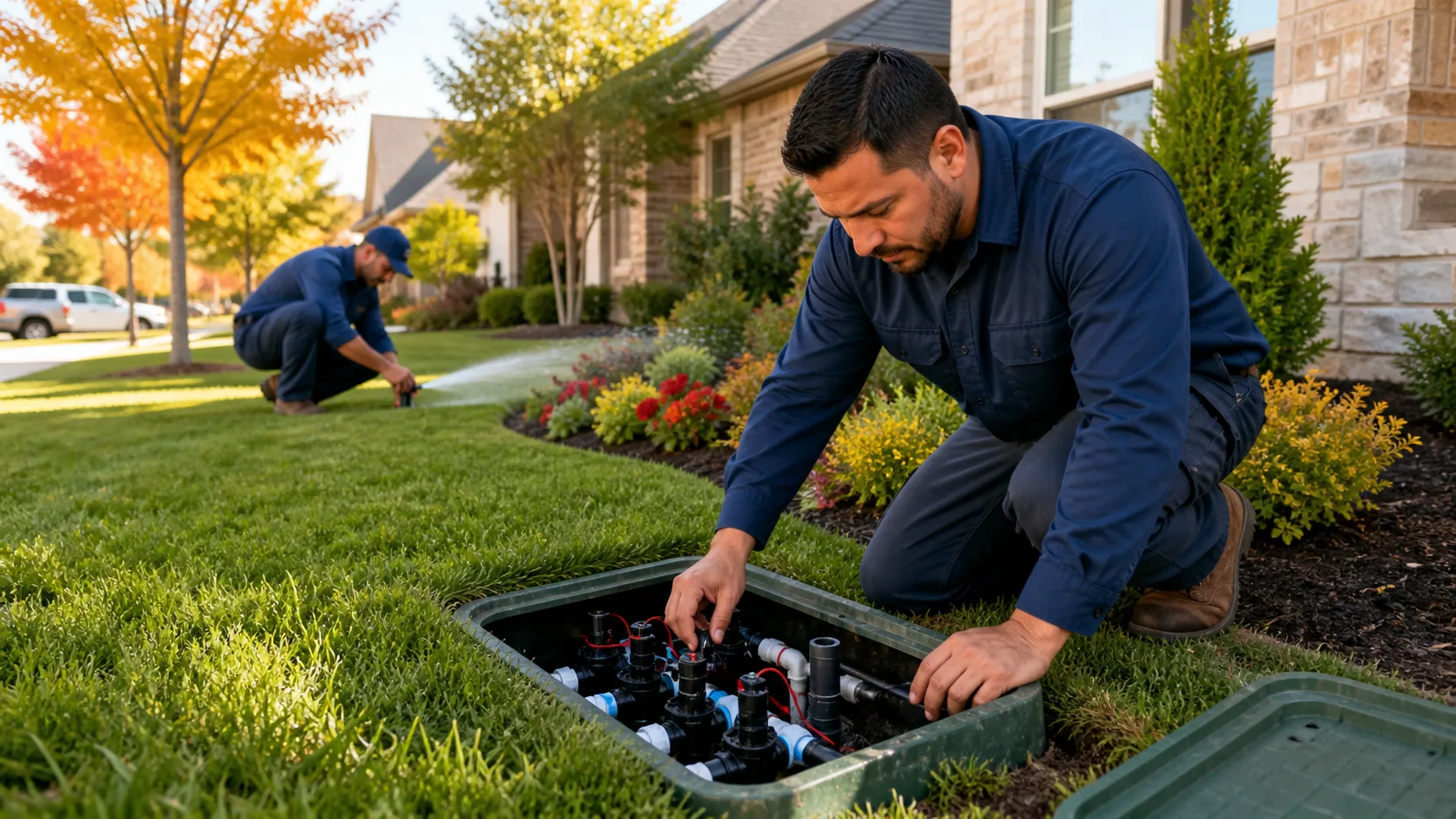
Each watering zone in your yard is controlled by a valve. On that valve is a solenoid, which is a small coil of wire that acts like an electric switch. When the controller sends power through the field wiring to the solenoid, the valve opens and water flows. When power stops, the valve closes.
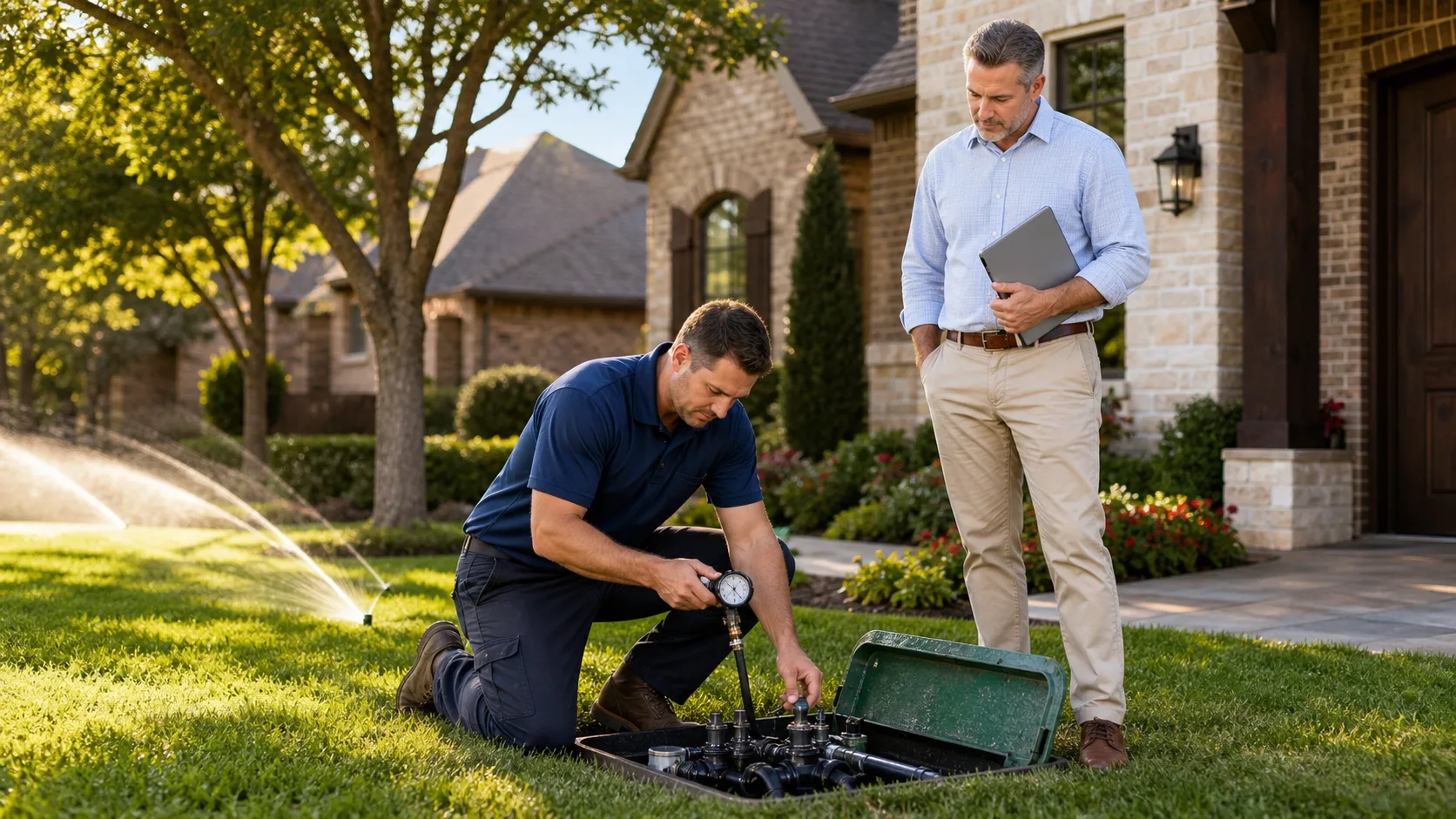
A simple way to check solenoids is with a multimeter set to measure resistance, or ohms. At the controller, with the power turned off, a trained person can test the resistance between the common wire and each zone wire. In general:
- A healthy solenoid falls in a moderate ohm range, not zero and not endless
- Very high resistance, or “open,” may mean a broken wire or failed solenoid
- Very low resistance, or “short,” can point to damaged wiring or a solenoid coil that has burned or melted
A basic safe test would include:
- Turning off power to the controller before touching wires
- Labeling or taking a picture of wire positions so nothing gets mixed up
- Testing one zone wire at a time, from the terminal to the common
- Writing down the readings so you can compare zones
If most zones have similar readings and one is very different, you may be looking at a single bad solenoid. If several zones share strange readings, the problem is often out in the field wiring, not just at a valve.
Tracking Down Common Shorts and Opens in the Field
When people talk about “shorts” and “opens” in irrigation wiring, they are describing how the electrical path is broken.
- A short happens when two wires touch that should not, or when water bridges a bare spot.
- An open happens when a wire is broken or a connection comes loose, so power cannot reach the valve.
Typical causes include:
- Damaged insulation from shovels, edging tools, or lawn aeration
- Wire splices sitting in flooded or muddy valve boxes
- Nails or staples driven into fence posts or concrete that pinch the wire bundle
- Corroded wire nuts on older systems
In McKinney yards, we often find trouble around:
- Sidewalks and driveways where soil shifts and cracks
- Valve boxes that stay soggy after storms
- Areas where pets dig or wildlife chew on exposed cable
- Older installations where splices were not protected well
Professional irrigation contractors use tools like wire trackers, tone locators, and fault locators to trace these problems. Instead of digging up half the yard, we can follow the signal along the wire path and narrow down the trouble spot. This kind of testing can be time-consuming and is hard to do accurately without the right equipment and training.
When DIY Stops and Professional Help Starts
Some light checking is fine for homeowners, like looking at the controller display, cleaning debris off a sensor, or noticing when zones act odd. Past that point, working with electrical parts, buried wires, and valves can get tricky in a hurry.
It is a good idea to call a licensed irrigation contractor if you notice:
- Fuses blowing or breakers tripping again and again
- Smoke, a burning smell, or melted plastic on the controller
- Several zones failing at once, or all zones stuck on or off
- Suspected buried wire damage anywhere in the yard
- Any discomfort using a multimeter or handling live electrical components
A family-owned company like Fellows Irrigation Services focuses on correct diagnosis, not guesswork. That means tracking issues from the controller, through the wiring, out to the valves, and confirming what is actually wrong before repairing it. Professional sprinkler controller repair in McKinney also helps protect your lawn and landscape, since we can limit digging and keep repairs as clean as possible.
As fall fronts start to pass through North Texas and freezes get closer, this is a smart time to make sure your controller, wiring, and sensors are ready. Catching wiring shorts, failed solenoids, or rain and freeze sensor problems now can reduce water waste, help prevent freeze damage to your system, and keep your McKinney, Collin County, or Denton County property in good shape for the next growing season.
Get Started With Reliable Sprinkler Repairs Today
If your watering schedule is off or zones are not responding, Fellows Irrigation Services is ready to help you with expert sprinkler controller repair in McKinney. We will diagnose the issue, fine-tune your settings, and make sure your system runs efficiently again. To schedule service or request a quote, simply contact us and we will follow up promptly.