Protect Your Sprinkler Investment Before the First Freeze
Winter can be tough on irrigation systems in North Texas, even if our cold snaps do not last very long. One hard freeze on a clear night is enough to crack pipes, split backflow preventers, and ruin valves. All it takes is water trapped in the wrong spot that turns to ice and starts to push outward.
When that happens, you usually will not see the damage until spring. Then you find dead spots in the lawn, muddy areas, low pressure, and a system that never quite runs right again. A simple winterization visit in the fall costs far less in time and stress than major repairs and landscape work later.
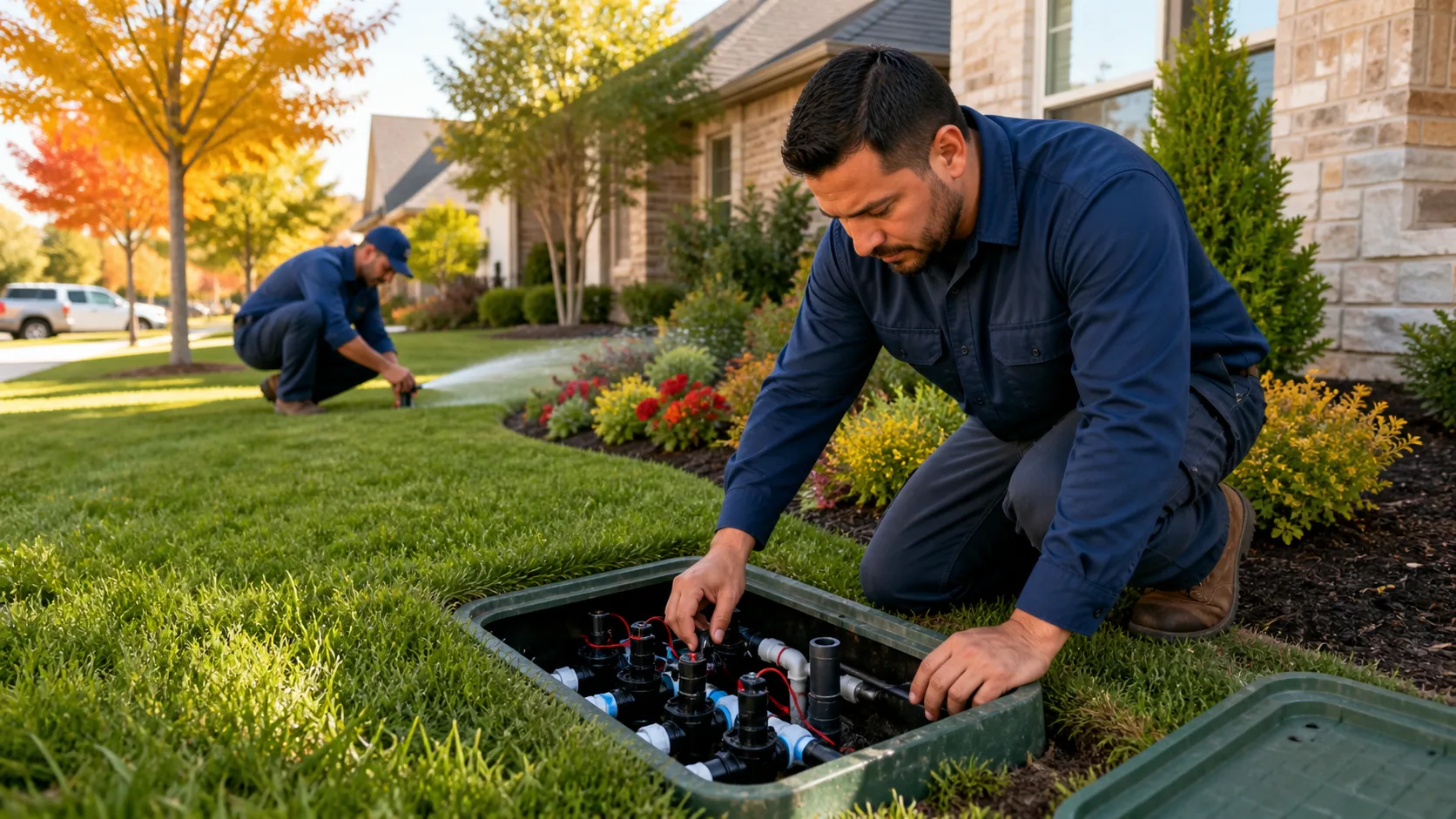
That is why we see fall shutdown and freeze protection as a normal part of irrigation system maintenance in McKinney. With a planned fall visit, we can shut your system down the right way, protect key parts from freezing, drain what needs to be drained, and get your yard ready to wake up smoothly in spring.
Why Winterization Matters in McKinney’s Wild Weather
McKinney does not have long, deep winters, but we do have fast changes. It can be sunny and warm during the day, then a front rolls in and drops temperatures below freezing before sunrise. Many homeowners still have their sprinklers running when that first hard freeze hits.
Inside your irrigation system there is always leftover water in:
- Lateral lines that feed your sprinkler heads
- The main line between the meter and backflow
- The backflow preventer body and test ports
- Valve bodies and shallow valve boxes
When that water freezes, it expands. Even a small amount of expansion can create hairline cracks in PVC, damage the internal parts of a backflow preventer, or split a fitting underground. Those cracks might not be obvious right away. You may only notice later as hidden leaks that cause soggy spots, poor water pressure, or zones that never fully come on.
In our area, late October through mid-November is usually the best window to winterize. The soil here often has a lot of clay, which holds water longer and responds poorly to repeated freeze and thaw cycles. Taking care of the system before the first hard freeze is the safest way to avoid surprises.
Step by Step: How to Safely Shut Down Your Irrigation System
A good shutdown does more than just flip one switch. It should protect both the electronic side and the plumbing side of your system.
Here is the general process professionals follow:
- Turn off the controller the right way
- Shut off the irrigation water supply
- Relieve pressure in key components
- Drain lines and devices as needed
First, we turn the irrigation controller to Off or to a Rain Mode setting, depending on the model. This keeps all your current programming saved so you are not starting from scratch in spring. It also stops surprise run cycles on cold nights or during the winter rain.
Next, we locate and close the main isolation valve that feeds the sprinkler system. This valve is separate from your house water shutoff. Closing it protects the backflow device and yard piping from constantly holding pressurized water all winter.
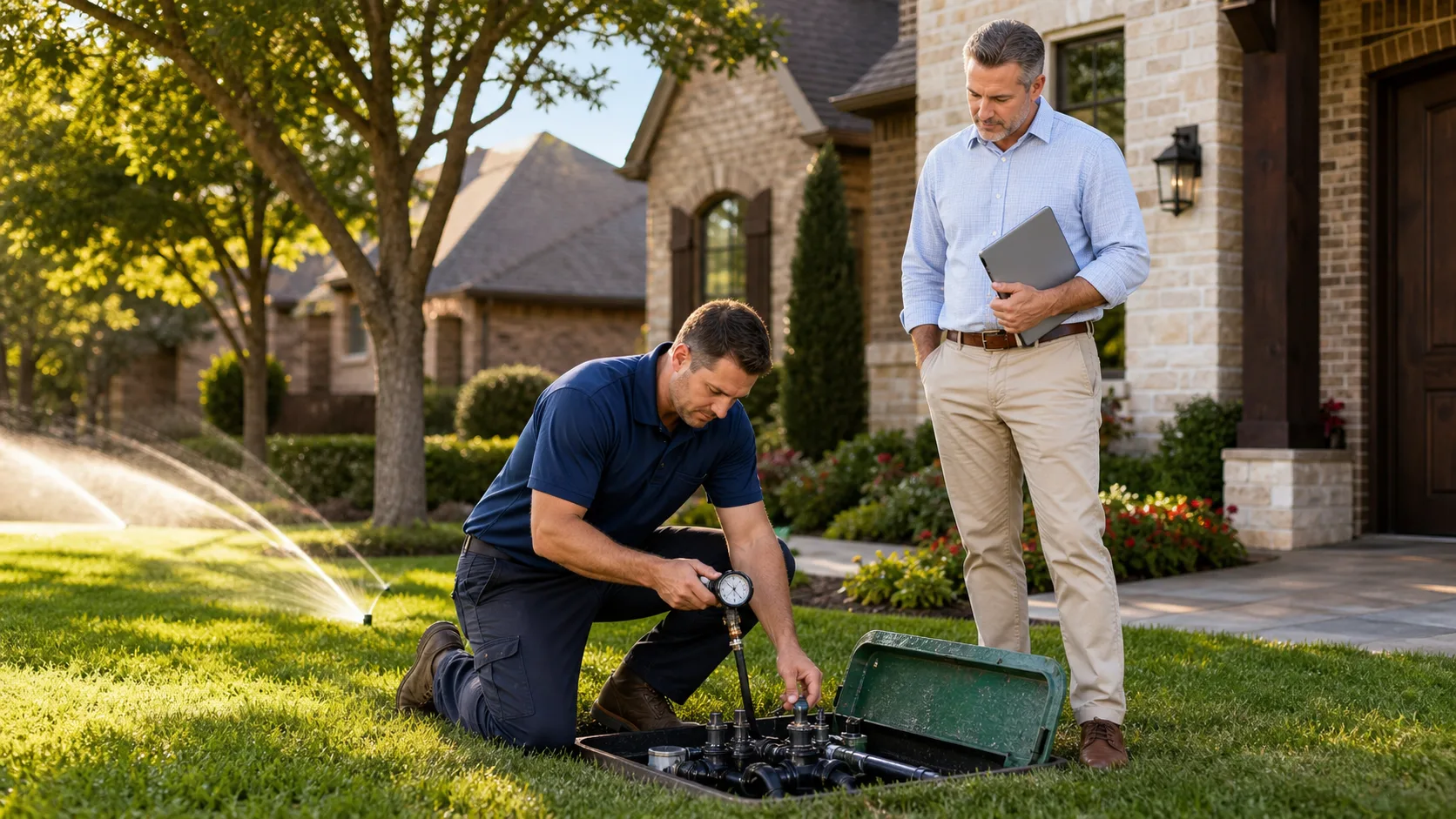
After the water is off, pressure needs to be relieved in a safe way. That might mean opening specific valves, loosening certain fittings, or running zones briefly while the supply is off. Doing this wrong can damage valves or leave trapped pockets of water. Because every system is a little different, this part is best handled by an irrigation professional who knows how your type of backflow and valves should be handled.
Insulating Backflow Preventers, Valves, and Exposed Pipes
In McKinney, many irrigation systems have backflow preventers installed above ground. These are one of the most common failure points in a freeze. Other weak spots include:
- Shallow valve boxes near the surface
- Exposed PVC or copper pipes along foundations
- Riser pipes that feed hose bibs or isolated heads
Good insulation focuses on keeping cold air off the metal and plastic parts while still letting the system breathe and drain. That usually means:
- An insulated cover sized for your backflow assembly
- Foam pipe wrap and weatherproof tape for exposed piping
- Solid valve box lids that actually sit level and close fully
Some common DIY shortcuts can actually cause more harm than good. Wrapping a backflow in plastic bags can trap condensation, which freezes and thaws right against the metal. Covering test ports and shutoff handles so tightly that you cannot reach them is also a problem in an emergency. Packing soil or mulch tightly around valve boxes can block drainage and leave valves sitting in icy water. A professional setup avoids those mistakes and keeps important parts accessible.
Draining Lines and Zones to Prevent Freeze Damage
Not every irrigation system drains the same way. In our area, we mainly see three methods:
- Manual drain valves that can be opened at low spots
- Automatic drain features built into some heads and fittings
- Professional compressed air blow-out services
Some systems are designed to self drain when water pressure is removed. They may have auto drain heads at the ends of lines or special fittings at low points. Even with those features, many yards in McKinney have uneven grading and low spots where water collects and stays.
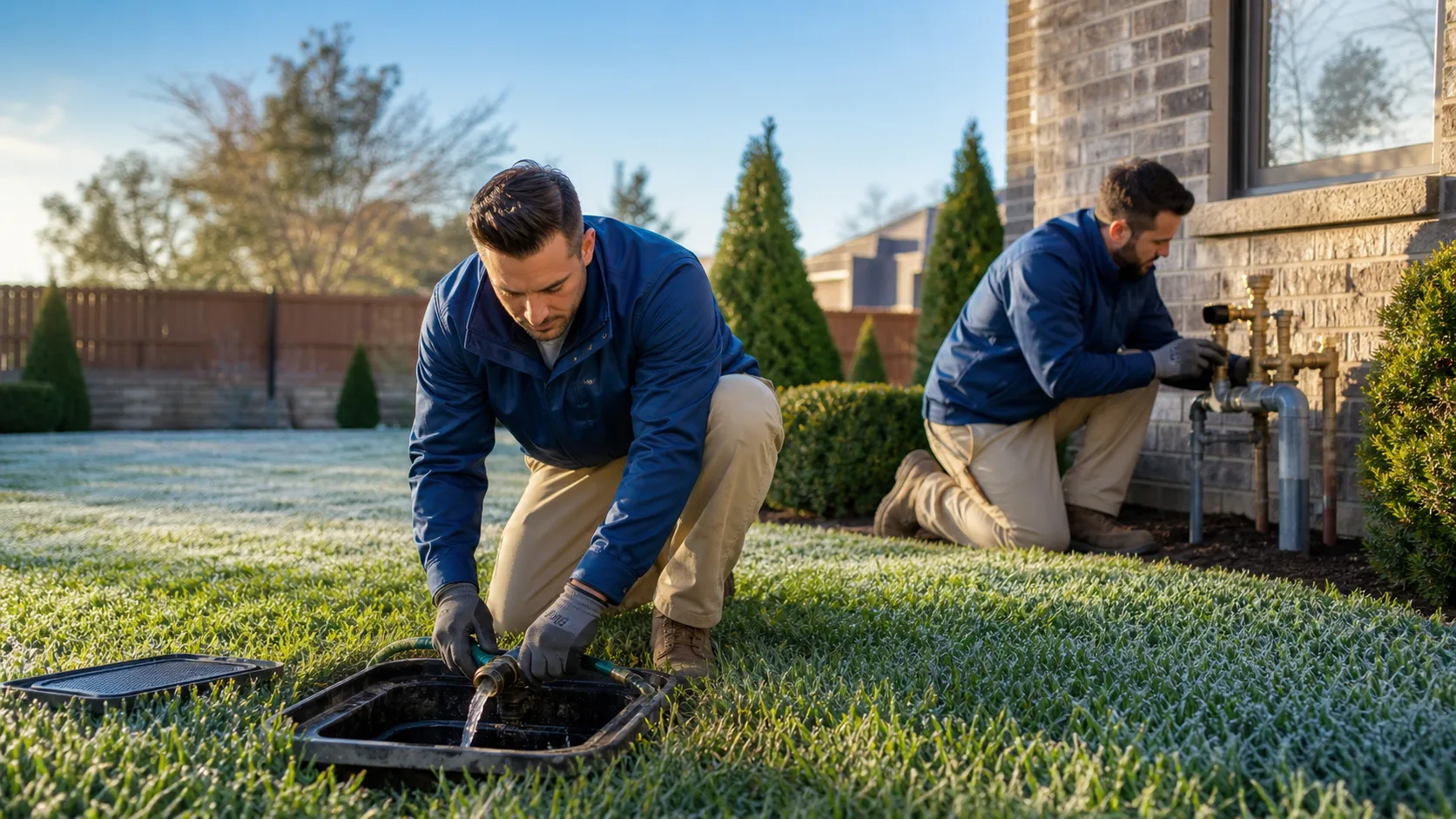
A professional can tell if your system is truly self draining or if you have zones that need extra help. In many cases, a controlled blow-out with compressed air is the safest way to clear lines. The key is using the right pressure level and sequence so you push water out without damaging fittings, valves, or heads.
The benefits of a professional blow-out include:
- Lower risk of cracked lateral lines that are hard to find
- Less chance of hidden leaks that show up months later
- Fewer broken sprinkler heads and fittings in spring
- A better chance your system starts up clean and even
Pro Tips for Hassle-Free Irrigation System Maintenance All Winter
Once your sprinkler system is winterized, a few small habits can keep things running smoothly through the colder months.
Helpful tips include:
- Walk the yard after big cold snaps and look for standing water
- Check visible parts of the backflow and exposed pipes for cracks
- Watch for unexplained soggy spots that might point to leaks
- Keep pets and lawn equipment away from insulated components
Winter is also a smart time to handle other parts of irrigation system maintenance in McKinney. With the watering schedule on pause, you can:
- Adjust spray patterns to stop overspray on fences and sidewalks
- Mark and cap unused or damaged heads you plan to remove
- Plan spring upgrades such as more efficient nozzles or smarter controllers
Simple organization helps too. Label your shutoff valves so you can find them fast. Keep any manuals and Wi-Fi passwords for smart controllers in one place. Store a few extra insulation supplies in the garage so you can react quickly if a surprise cold front appears mid winter.
Taking these steps turns winter from a risk into a chance to get ahead. With the right shutdown, insulation, drainage, and a little attention, your system will be ready to wake up strong when watering season returns.
Protect Your Landscape With Reliable Irrigation Care
If you are ready to keep your lawn healthy and avoid costly surprises, our team at Fellows Irrigation Services is here to help with expert irrigation system maintenance in McKinney. We will inspect, adjust, and repair your system so it runs efficiently through every season. To schedule service or ask questions about your specific setup, simply contact us and we will follow up promptly.